The Complete Youth Soccer Guide for First-Time Parents
Youth soccer is one of the most popular youth sports in the country, and for good reason — it’s affordable to start, accessible at almost every age, and genuinely fun for most kids. But if you’re brand new to it, the first season can feel like a lot: Which league? What gear? Do we know the rules? What are you supposed to do on the sideline? This is why we build this Youth Soccer Guide for Parents.
This youth soccer guide for parents is built for parents who are just getting started. It won’t cover everything — no single post can — but it will give you a clear picture of how youth soccer works, what to expect, and where to go when you need to dig deeper. By the time your child’s first practice rolls around, you’ll feel like you belong there.
HOW YOUTH SOCCER IS ORGANIZED
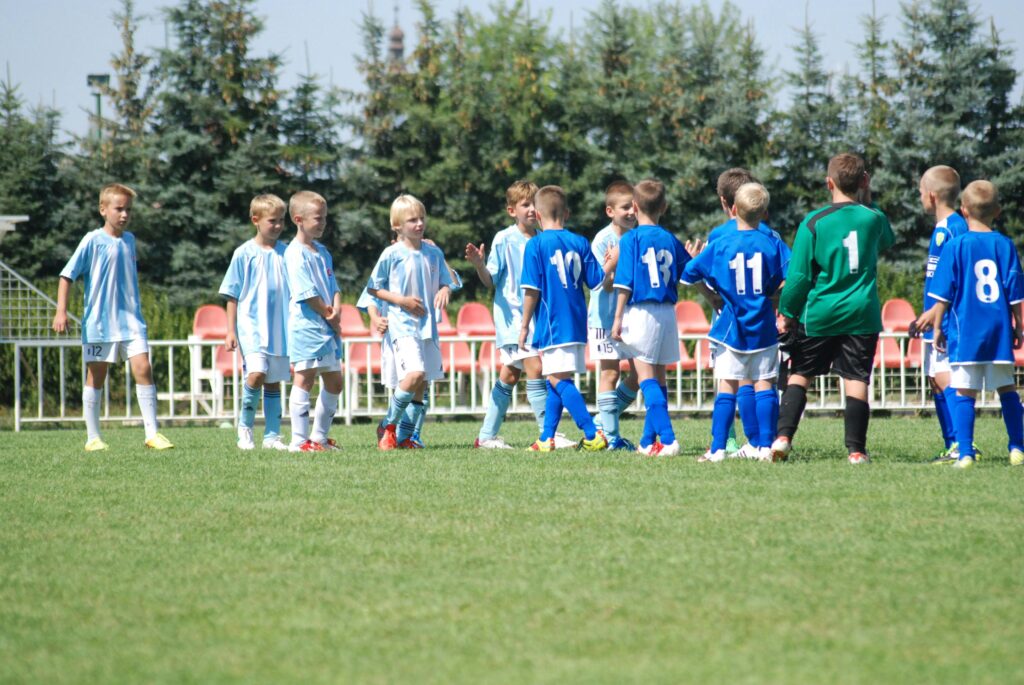
The first thing to understand is that youth soccer is divided into age groups based on birth year, with the designation “U” meaning “under.” A U8 team includes players who are 7 or 8 years old. A U10 team includes players 9 or 10. Most leagues use a December 31 cutoff, so the age group your child falls into is based on how old they are at the end of the calendar year.
The other big structural difference from what you see on TV: the game is modified at every age to match what kids can actually handle. U6 games are small, chaotic, and basically just kids chasing a ball around a tiny field — and that’s exactly right for that age. By U10, teams start using real positions and basic rules. By U14, the game looks much closer to the adult version.
If you want a full breakdown of how rules change at each level, our post on youth soccer rules every parent should know covers it age by age.
RECREATIONAL VS. COMPETITIVE: WHAT’S THE DIFFERENCE
Most families start in recreational soccer — a local league organized through a parks and recreation department or community organization. Rec leagues are low pressure, low cost (usually $100–300 per season), use volunteer coaches, and guarantee equal playing time. For kids under 8 or 9, it’s almost always the right call.
Competitive soccer — sometimes called travel, select, or club soccer — is a different animal. It requires tryouts, involves more practices per week, costs significantly more, and the emphasis shifts toward winning and skill development. It’s not better than rec soccer for young players; it’s just different, and it’s designed for kids who are ready for that environment.
Deciding when and whether to make that jump is one of the bigger decisions youth soccer families face. We walk through the whole thing in our guide to moving from rec to competitive soccer, including the questions worth asking before you commit.
WHAT GEAR YOUR CHILD ACTUALLY NEEDS
Youth soccer gear is pretty simple, especially at the recreational level. Here’s what your child actually needs to get started:
Cleats. Firm-ground (FG) cleats work on most grass fields. Budget $35–75 for a quality pair — you don’t need to spend more than that for a beginner. Leave a thumb-width of space at the toe for growth, but don’t buy two sizes too big or they’ll slip around.
Shin guards. Required at every level. Slip-in style works well for younger kids. They should cover the shin from the ankle up to just below the knee. Budget $15–40.
Soccer ball. Get one for home practice — kids who kick a ball around in the backyard between sessions improve faster than those who only touch it at practice. Size 3 for ages 8 and under, size 4 for ages 9–12, size 5 for 13 and up. Budget $20–40.
Crew or knee-high soccer socks go over the shin guards. Buy two or three pairs so you’re not scrambling on game day.
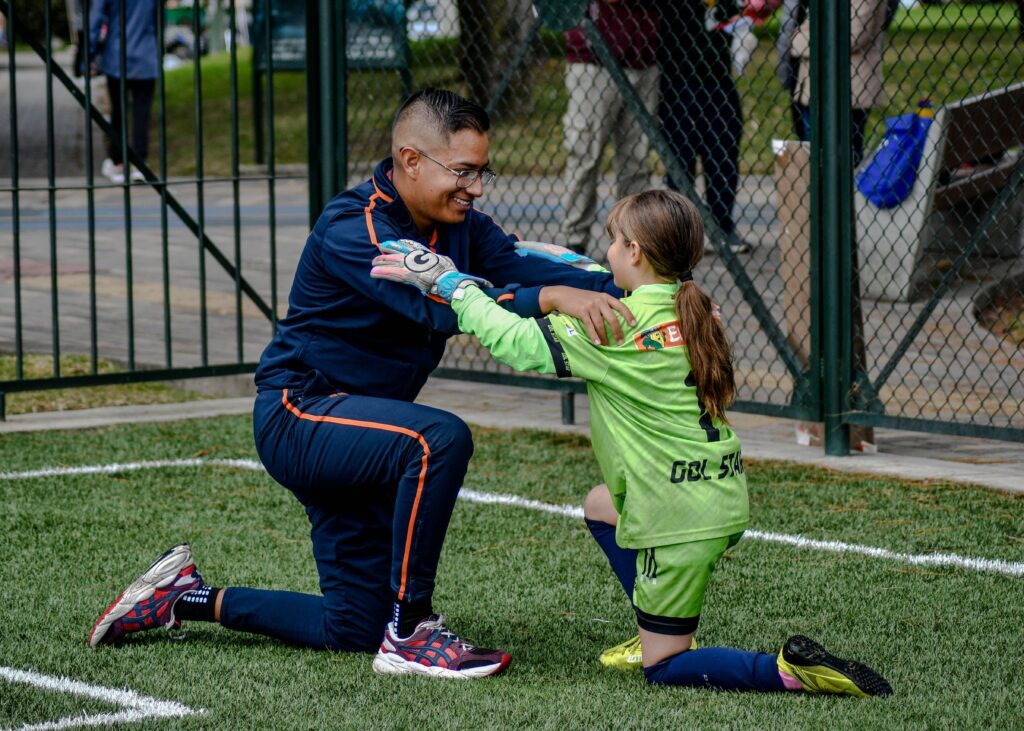
That’s genuinely all you need to start. Everything else — bags, training cones, goalkeeper gloves — can wait until you know your child is hooked. Our guide to choosing the right soccer ball and our youth cleats roundup go deeper if you want specific recommendations.
WHAT TO EXPECT AT PRACTICES AND GAMES
A typical youth practice runs 60–90 minutes and follows a pretty predictable structure: a warmup, some ball skill work, a small-sided game or scrimmage, and a cooldown. The younger the age group, the more the session looks like organized chaos — and that’s fine. Free play and small-sided games are actually where kids learn the most.
Arrive 10–15 minutes early, especially for the first few sessions. Let the coach run the practice without interrupting. Your job is to be present and encouraging, not to coach from behind the fence.
Game day is similar. Get there early, cheer for both teams, and let your child play without a running commentary from the sideline. The drive home is not the time for a performance review — ask them what was fun, not what went wrong. Our post on sideline etiquette covers this in detail and is worth a read before the first game.
For a complete packing checklist, our soccer parent survival kit post has everything you need.
POSITIONS, DEVELOPMENT, AND WHAT YOUR CHILD IS LEARNING
In the early years, positions don’t matter much. Kids at U6 and U8 are just learning to move with the ball and function as part of a group. By U10, they start understanding that there are defenders, midfielders, and forwards — and what each role is supposed to do. By U12, they start to develop genuine preferences.
The most important thing to know: young players shouldn’t specialize in one position too early. Kids who play multiple positions through early adolescence develop a better overall understanding of the game, which serves them well later regardless of where they end up. Our post on youth soccer positions explains each role in plain language.
On the development side, the most valuable thing your child can do outside of practice is touch a ball at home. Backyard dribbling, wall passing, juggling — none of it has to be structured. Just time with the ball. If your child wants more, our 7 soccer drills kids can do in the backyard is a good starting point.
HOW TO SUPPORT YOUR CHILD WITHOUT OVERDOING IT
Your attitude on the sideline and in the car shapes your child’s experience more than almost anything else. That’s not meant to create pressure — it’s actually good news, because it means you have real influence.
The basics: focus on effort, not outcomes. Ask about fun moments, not performance. Celebrate improvement, not just winning. If your child makes a mistake, let the coach address it. Your job is to be the person they’re glad to see after the game, win or lose.
The harder question comes when your child wants to quit, or when you’re wondering whether to push harder. We’ve written about both sides of that in our post on whether you should push your kid to play soccer.
One thing worth keeping in mind: the research consistently shows that kids who play multiple sports in early childhood develop better athletically in the long run than those who specialize in one sport early. Letting your child play baseball or basketball or swim in the offseason isn’t a setback — it’s usually a benefit.
WHAT SOCCER ACTUALLY COSTS
Recreational soccer is genuinely affordable. A season typically runs $100–300, plus a one-time gear investment of $100–200 to start. After that first year, costs stay low — cleats every season or two as feet grow, a new ball eventually, maybe upgraded shin guards.
Competitive and club soccer is a different conversation. Costs can range from $500 to $5,000+ per year once you factor in fees, uniforms, equipment, and tournament travel. If you’re thinking about that path, it’s worth understanding the full picture before you commit. Our post on the true cost of youth soccer breaks it all down honestly.
FREQUENTLY ASKED QUESTIONS
What age should my child start? For most kids, somewhere between 4 and 6 is the sweet spot. But readiness matters more than age — we cover the full breakdown in our guide to starting age for youth soccer.
What if my child isn’t naturally athletic? Soccer skills are developed, not inherited. Many kids who struggled early became strong players because they put in time with the ball and found a coach who believed in them. Focus on enjoyment and effort, and let the development take care of itself.
Should my child play other sports? Yes, especially before high school. Multi-sport participation builds athleticism, prevents burnout, and often makes kids better soccer players in the long run.
When should we consider competitive soccer? Most kids aren’t ready before ages 9 or 10, and many are better served by staying in rec soccer longer than that. The decision should be driven by your child’s genuine interest and readiness — not outside pressure or fear of falling behind. Our rec-to-competitive guide walks through the full decision.
The first season is usually the hardest — not because it’s complicated, but because everything is new. Once you’ve been through a practice and a game or two, it starts to feel natural. Your child gets more comfortable, you get more comfortable, and the game starts to become a real part of your family’s rhythm.
That’s the goal. Not a scholarship, not a travel team, not getting ahead of the neighbor’s kid. Just a kid who loves to play and a parent who knows how to support them.
To get started, use this youth soccer guide for parents – everything else follows from that.