How to Choose the Right Soccer Ball size by Age
Quick answer: Size 3 for players 8 and under, Size 4 for ages 8 to 12, and Size 5 for ages 12 and up. That’s the FIFA and US Youth Soccer standard for soccer ball size by age. It’s built around circumference and weight, not just what feels “big enough.” A ball that’s too heavy or too big for a kid’s foot slows down technique before it ever has a chance to develop.
I found this out the hard way. My son played half a U8 season with a ball two sizes too big before I caught it. He was toe-punting everything and getting frustrated, and I honestly thought it was a skill issue. It wasn’t. It was the ball. Once we switched him down to the right soccer ball size for his age, his touch changed within two weeks.
Here’s the full breakdown so you don’t make the same mistake I did.
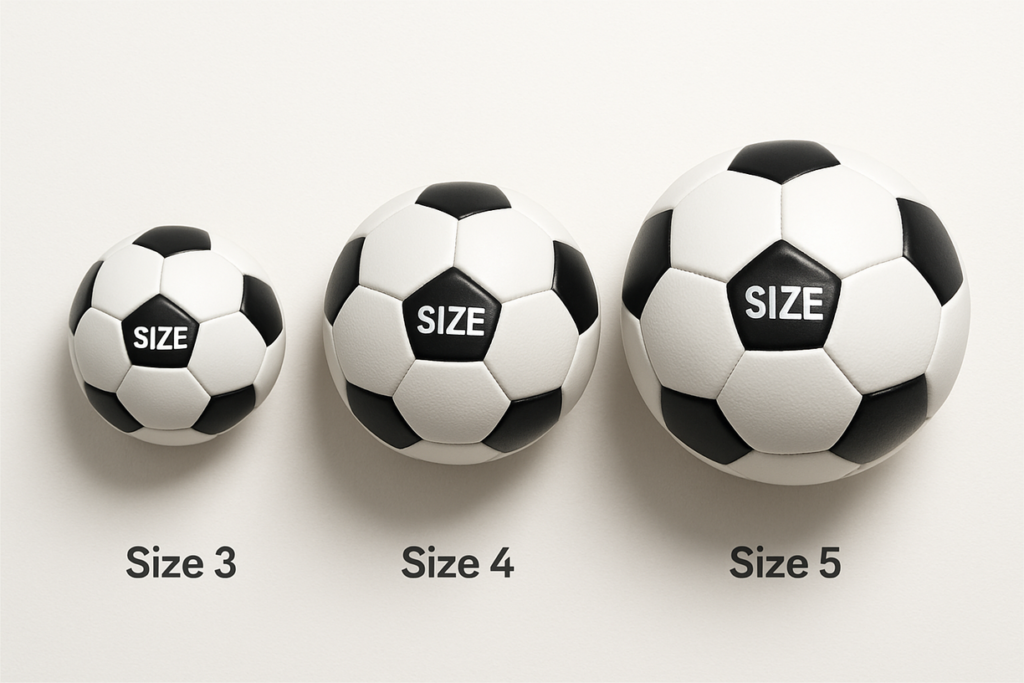
Soccer Ball Sizes by Age Chart
Size 1 (Ages 2-4): 18-20 inch circumference, 7-9 ounces. This is a toddler introduction ball — too small for real practice, but good for teaching a young kid what it feels like to touch a ball. Some older players also use a Size 1 for close-control footwork drills.
Size 2 (Ages 4-6): 20-22 inch circumference, 9-10 ounces. Bridges the gap between toddler play and structured soccer. Light enough that preschoolers can move it without feeling overwhelmed.
When It starts to matter
Size 3 (Ages 8 and under): 23-24 inch circumference, 11-12 ounces. This is where real skill development starts, and it’s the most important soccer ball purchase you’ll make for a young player. If your league still hands out Size 4 balls to 7- and 8-year-olds, don’t assume that’s correct — check the official ball size chart against your specific league’s rules, since some leagues lag behind the standard.
Size 4 (Ages 8-12): 25-26 inch circumference, 12-13 ounces. The bridge ball. It’s an inch or two smaller and roughly half a pound lighter than a Size 5, which sounds small until you watch a 9-year-old try to strike a full-size ball — the technique falls apart because the ball is simply too heavy for the leg driving it.
Size 5 (Ages 12+): 27-28 inch circumference, 14-16 ounces. The official match ball size from age 12 through the pros. Every high school, college, and adult league plays with this size, so once your kid ages into it, they’re training with the same ball they’ll use for the rest of their playing career.
One caveat worth a quick check: age cutoffs shift slightly by country and league. England now recommends Size 3 through age 9, while Wales, Scotland, and Ireland stick with Size 4 at that age. When your club’s recommendation differs from the FIFA chart, go with your club — they’re the ones setting the game-day rules.
Signs Your Kid Is Using the Wrong Soccer Ball Size by Age
You don’t need a tape measure to catch this. Watch for:
Your kid toe-punting the ball instead of striking with the top of the foot or laces. Struggling to get any power on a pass, even a short one. Kicking off-balance or falling over after a shot. Losing control of the ball the moment it picks up any speed.
Any of those, especially all at once, usually means the ball is too big or too heavy — not that your kid needs more practice.
Material and Bladder: What Actually Matters
Size gets most of the attention, but construction affects performance too.
Synthetic leather is the right call for youth players over genuine leather — it holds up better in the rain, on turf, and against a driveway curb, and it performs consistently once it’s broken in. Genuine leather feels great but needs more upkeep than most families want to deal with for a ball that’s going to live in a backpack.
For the bladder, butyl holds air for weeks and is the practical choice for a busy family. Latex has a better touch and response, which is why you’ll see it on higher-end match balls, but it needs to be topped off far more often — which is a hassle if you’re not already checking pressure regularly.
When to Size Up
Don’t size up early to “grow into” a ball — that’s the single most common mistake parents make, and it undercuts the whole point of age-appropriate sizing. Move up only when your child ages into the next bracket or when their current league requires it. If you’re not sure your child is developmentally ready for the jump even after aging up, our guide on what age kids should start playing soccer walks through how to think about readiness more broadly, not just by the calendar.
If your child is also working on footwork outside of practice, our backyard soccer drills for kids post pairs well with a properly sized ball — using the wrong size undoes a lot of the benefit of those drills.
FAQ’s
No. An oversized ball works against skill development and increases the odds of frustration and bad habits like toe-punting. Buy for the size they are now.
Recreational use: roughly 1-2 years. Competitive, daily-practice use: closer to 6-12 months. Replace sooner if you see cracking, uneven bounce, or trouble holding air.
For casual and recreational play, a mid-range ball is genuinely fine. For competitive players training daily, a better-quality ball holds its shape and air pressure longer, which matters more the more it’s used.
Size 5 — the same official match size used from age 12 through the pro leagues.