
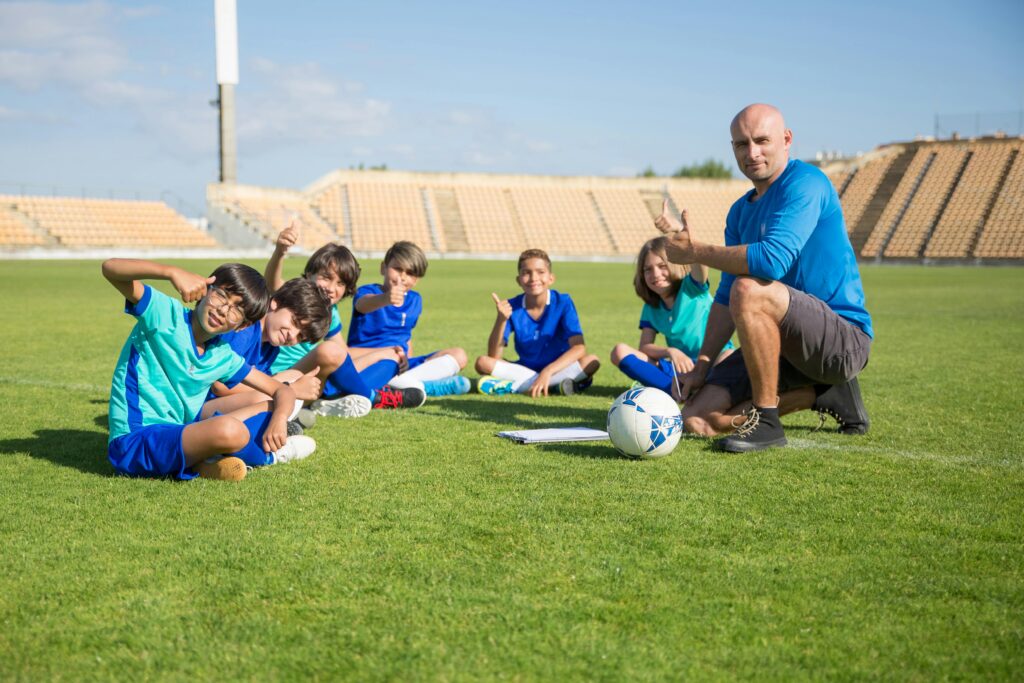
Youth soccer position specialization before age 12 or 13 usually does more harm than good. Kids who rotate through multiple positions develop stronger tactical understanding, become more complete athletes, and tend to face fewer overuse injuries than kids locked into one spot from the start. If your U9 has played the same position since their first season, it’s worth rethinking that setup before it becomes a habit nobody questions.

Why Youth Soccer Position Specialization Happens Too Early
It happens for understandable reasons. A coach finds one kid who’s tall and puts them in goal. A parent notices their kid is fast and pushes for striker every season. It’s easier to manage a lineup when everyone has a “spot,” and nobody’s trying to sabotage development on purpose — it’s just the path of least resistance. But that convenience comes at a cost.
The Research Behind Youth Soccer Position Specialization and Injury Risk
The research on early specialization, while mostly focused on single-sport commitment rather than position specifically, points in a clear direction: kids who diversify their experience early tend to outperform kids who narrow in too soon. Athletes who specialize young in a single sport face meaningfully higher overuse injury rates than peers with more varied training — the same logic applies to repeating one position’s movement patterns year after year. A center back does a lot of jogging backward and heading; a striker does a lot of explosive sprinting and cutting. Different stresses on a still-developing body, over and over, without variety.
How Playing Multiple Positions Builds Better Tactical Understanding
Beyond injury, there’s the tactical piece — and this is where youth soccer position specialization really costs kids something. A forward who’s never played defense doesn’t understand why their defender is yelling at them to track back. A defender who’s never played midfield doesn’t know what an open passing lane actually looks like from the receiver’s side. Coaches at higher levels consistently say the same thing: they want players who understand the whole field, not just their corner of it. Even at the professional level, some of the most valuable players — Real Madrid’s Federico Valverde being a good example — built their careers on being comfortable in more than one role.
When Should Kids Specialize in a Soccer Position? (U13–U14)
So when does it make sense to settle in? Somewhere around U13–U14 is the general consensus, once a player has had real exposure to multiple roles and a genuine preference starts to emerge. At that point, specialization isn’t a shortcut — it’s a natural next step for a kid who already understands the game from more than one angle. For more on how positions typically evolve by age, our Youth Soccer Positions Explained for Parents guide breaks down each role in plain language.
If your child is just getting started, our Ultimate Guide to Youth Soccer for First-Time Parents covers this same “don’t specialize too early” principle alongside everything else you need to know. And if you’re building out their off-field training in the meantime, our Youth Soccer Strength Training by Age guide and 7 Soccer Drills Kids Can Do in the Backyard are both built around the same well-rounded development approach. Coaches looking to build variety into practice can also check out our guide to small-sided games, which naturally rotates kids through more touches and roles than traditional 11v11 drills.
FAQ’s
Generally not. Most development frameworks and coaching consensus recommend rotating players through multiple positions through at least U12, and often into U14, before letting a preferred role take over.
Enthusiasm for a position is fine — just make sure they’re still getting reps elsewhere in practice and lower-stakes games. Preference and permanent specialization aren’t the same thing.
The opposite tends to be true. Versatile players are more valuable to coaches at every level, including college recruiters, because they can fill gaps and adapt to different tactical setups