
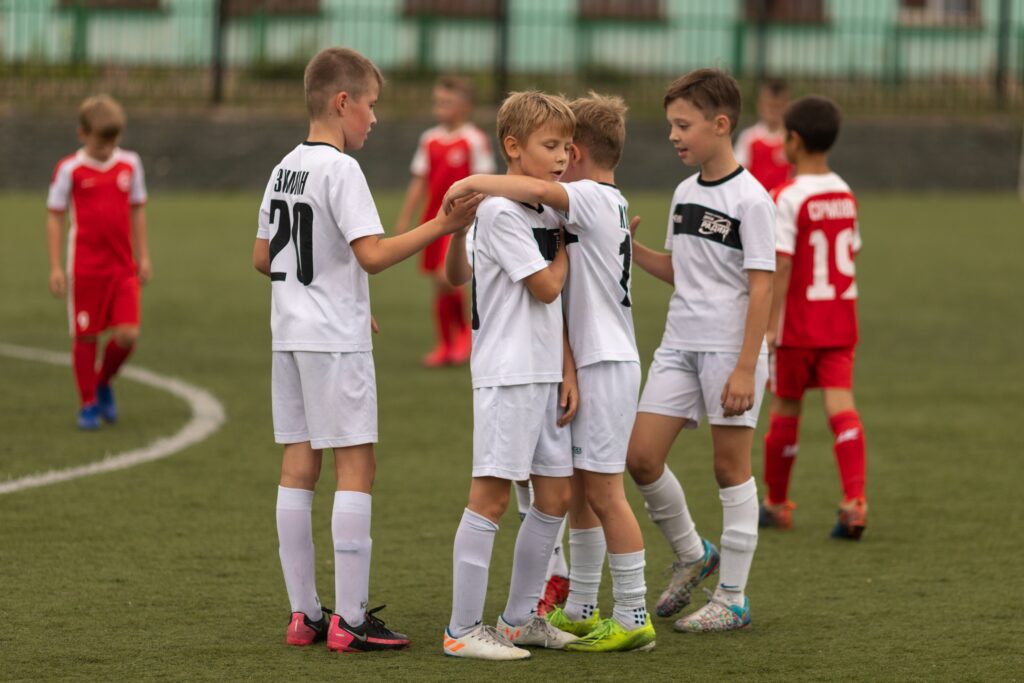
I’ve stood on the sideline of games where my team had more talent than the other side and still looked worse for 60 minutes, because nobody was talking. Communication on the field is the cheapest upgrade you can make to a soccer team. It is also the one most youth coaches never actually coach.

Here’s the thing about communication on the field: it’s not shouting encouragement. It’s information. When a defender calls “man on,” the player receiving the ball now knows something about the game that their eyes couldn’t tell them fast enough. That half-second of warning is the difference between a clean turn and a turnover in your own third.
Researchers studying elite players have found that most communication during a match isn’t even verbal — crowd noise and distance make shouted instructions hard to hear, so players rely heavily on body language and pointing to direct each other since players can often not hear what their teammates are saying verbally, due to both the distance between teammates and the crowd noise. That matters for how we coach it at the youth level too. Communication on the field isn’t just about volume — it’s hand signals, pointing runs, eye contact, even how a player carries themselves after a mistake.
What does communication on the field actually create? Three things, in order:
Faster decisions. A player who hears “time” knows they can take a touch. A player who hears “man on” knows they can’t. That information turns a 50/50 guess into a controlled decision, made before the ball even arrives.
Team shape. Defenses that talk stay connected — they shift together, cover for each other, and close gaps before they become breakaways. Defenses that don’t talk leave gaps because nobody knew a teammate had stepped out.
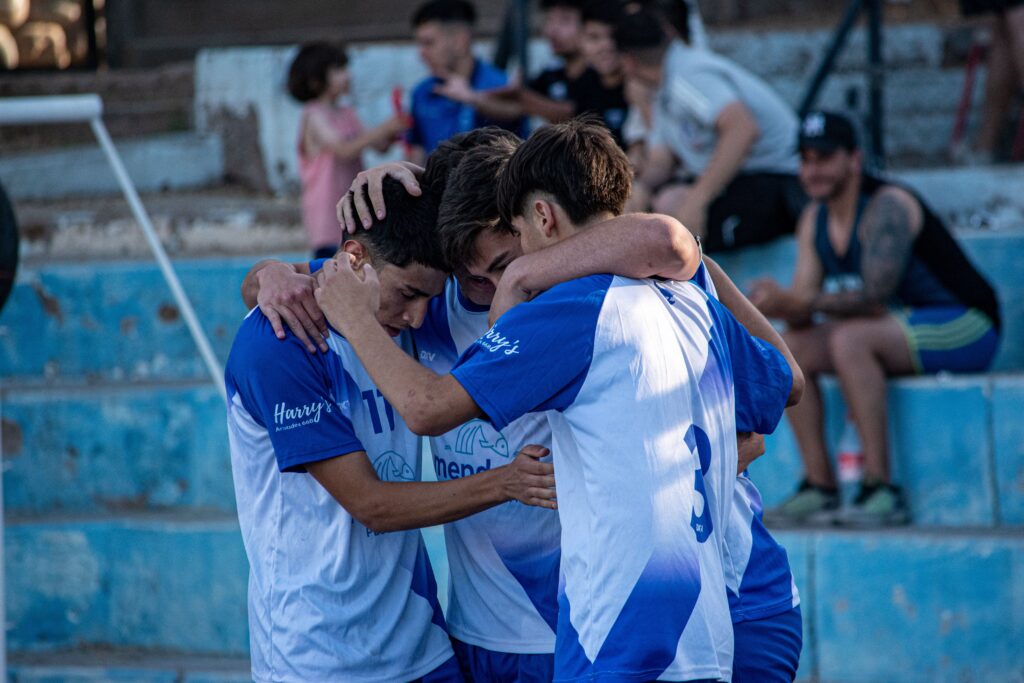
Trust. This is the one parents underestimate. A team that communicates well on the field starts trusting each other off it too. Kids who call for the ball, warn a teammate, or pick each other up after a mistake are building the same chemistry that shows up in how hard they compete for one another late in a game.
None of this is about being the loudest kid on the field. Some of the best communicators I’ve coached were quiet off the ball and precise the second they had information to share. If your child is naturally reserved, that’s not a communication problem — it’s a confidence problem, and it’s worth reading through what actually builds soccer IQ before assuming louder is better.
If you want to start building this at home or in the backyard, a good entry point is a handful of universal terms: “man on,” “time,” “switch,” “turn,” “away.” Five words, used consistently in training, do more for a team’s communication than any pep talk.
FAQ
Man on,” “time,” and “turn” cover the majority of in-game situations and are simple enough for even the youngest players to use correctly.
It’s trainable. Coaches who build specific calls into every drill — not just games — see players start using them automatically within a season
Both, but it tends to show up first on defense, where one missed call can turn into a goal against. Attacking communication (calling for runs, switching the point of attack) develops a bit later as players read the game more.