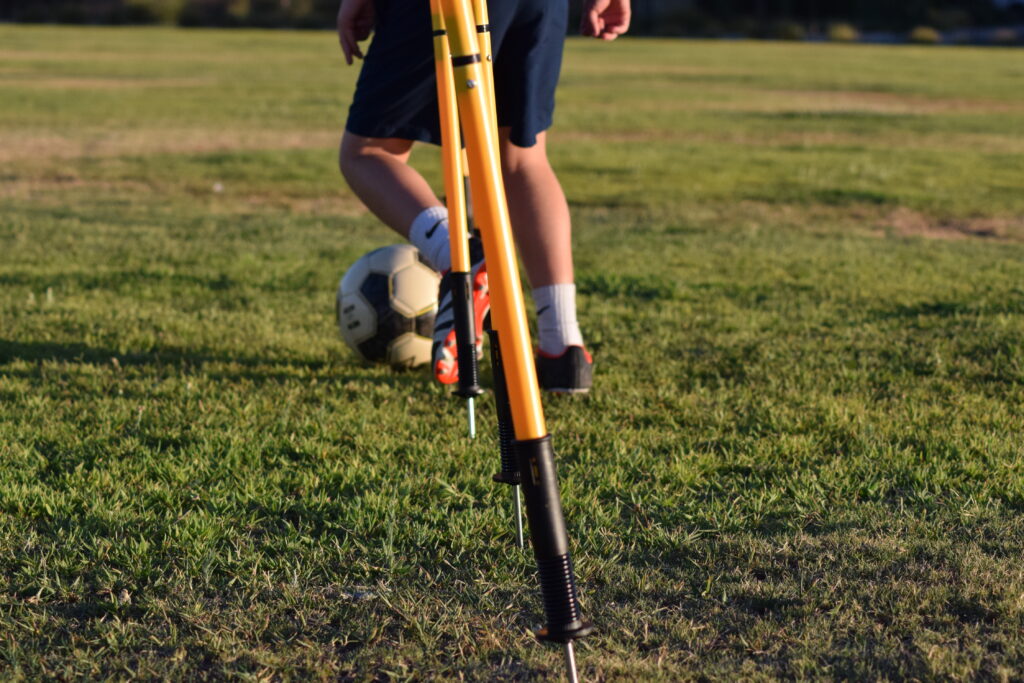
A few seasons ago I was still leading every warmup myself. Starting with setting up the cones, whistle around my neck, “follow me” energy the whole time. This structure a youth soccer practice worked fine. I was the most active person on the field and the kids were just following directions. Not thinking. Not owning anything. So I changed it, and this is the framework I’ve defaulted to ever since.
MY Structure OF a Youth Soccer Practice
To be clear, it’s not a script I run identically every day. Some practices lean heavier on ball mastery, some weeks there’s no scrimmage at all. This is the shape I believe a practice takes when nothing’s pulling it in a different direction — not a formula I’m locked into.
The warmup isn’t mine anymore
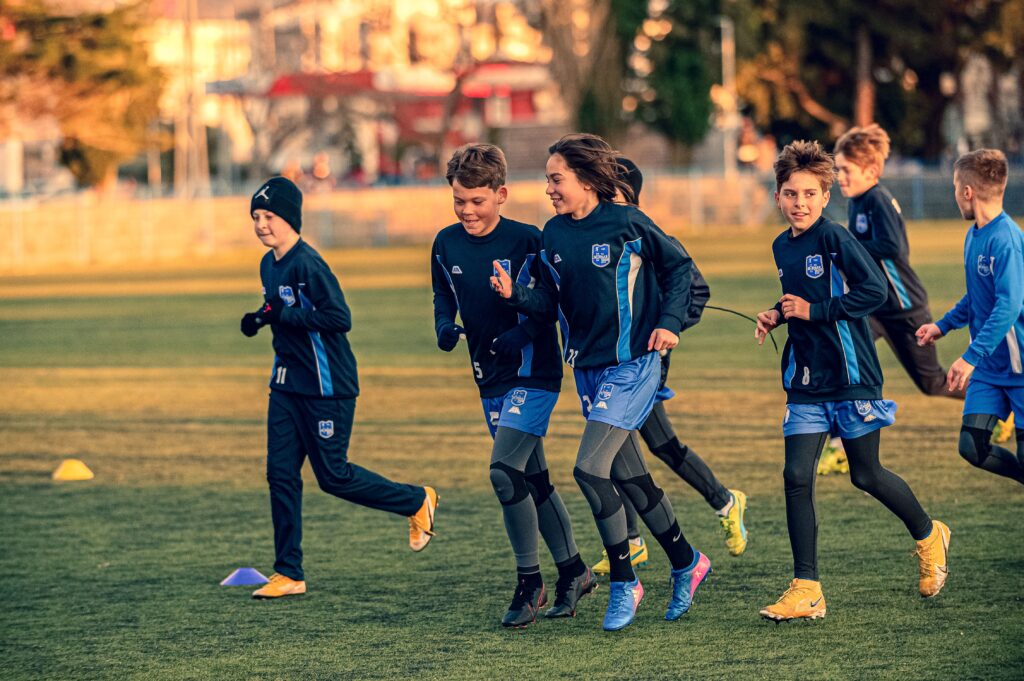
I pick a player — usually rotating through the group over the season — and teach them the warmup ahead of time: what it’s supposed to accomplish, what it should look like run well. Then at practice, they run it. I step back.
The first few times, it’s rough — forgotten steps, off pace, nobody quite sure who’s in charge. That’s the point. It puts a kid in a leadership spot in front of his teammates before the ball’s even in play. I went deeper on how I teach it here.
Ball mastery gets protected time
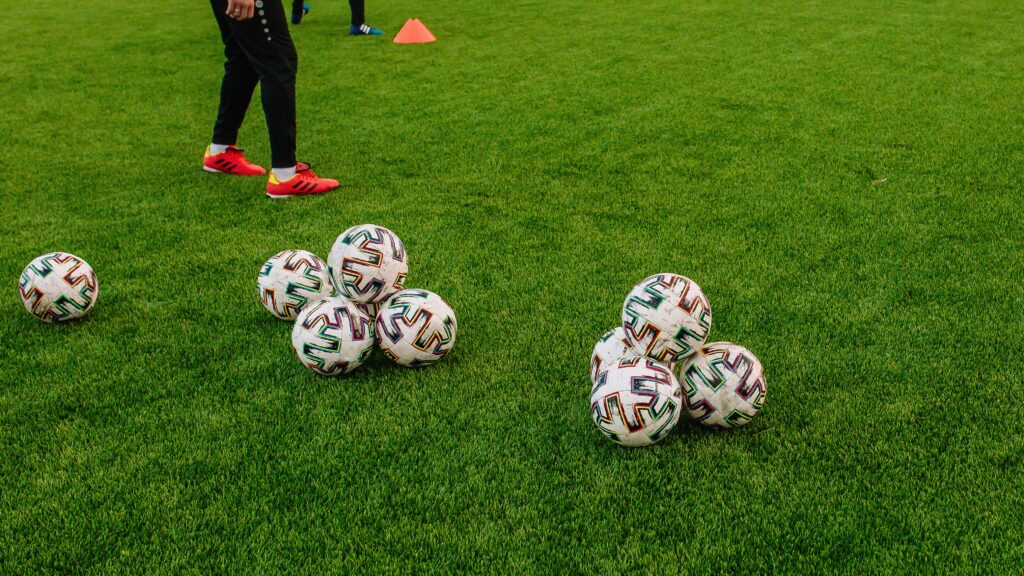
After the warmup, I try to get into ball mastery — touches, inside/outside foot, sole rolls, quick change of direction, all tight to the feet. I’m not coaching decisions here, just trying to make the ball feel like it belongs to them. This isn’t just a hunch — coaches working in professional academy settings point to ball mastery as a fundamental part of skill acquisition, with the skills learned during this stage laying the foundation for more complex team and tactical learning later on. More on that here: “Ball Mastery” —. If first touch looks sloppy across the team, this block runs long on purpose, even if it eats into the next one. It’s the section I protect hardest.
Fundamentals — passing and moving without the ball
When there’s time, we move into the teaching block. I’m working passing technique, but just as much I’m working what players do without the ball — angles of support, checking to the ball, knowing when to make a run versus hold a position. Youth soccer is full of clusters around the ball because nobody’s taught to move without it, so this gets real attention. I keep it to one or two coaching points max — more than that and nobody actually learns any of it.
When there’s time, the scrimmage is the test
If we get there, we scrimmage — not as a reward, but to see if anything I coached actually stuck. If I spent the middle of practice on movement without the ball, I’m watching for that specifically, then bringing it up after if it’s not showing up. Some practices we don’t get there, and that’s fine — the scrimmage isn’t the part I feel obligated to protect.
Why I default to this order
Player-led warmup → ball mastery → fundamentals → scrimmage (when we get to it) moves from low-pressure and individual to full-speed and game-realistic — which roughly tracks how U.S. Youth Soccer frames good practice design: teach a skill, apply it under pressure, use it live. “The Right Way to Warm Up in Youth Soccer” — I didn’t build this off a textbook, though — it came from watching what stuck with my own teams and adjusting.
FAQ
No — it’s the framework I default to, but the balance shifts depending on what the team needs that day.
It teaches ownership and leadership, and it frees me up to actually observe the team instead of leading from the front.
About as close to non-negotiable as anything I run — first touch only gets automatic under pressure if it’s constantly reinforced.
It’s the part of practice where I find out if what I coached actually transferred to game-like decisions.