
Soccer terms for parents: 100+ Words Every Parent Should Know
Have you ever stood on the sideline when the coach yells “Man on!” and wondered what your kid is supposed to do? But what about calls like “Step!”, “Switch!” or “Check!”? If you’re unsure what these words mean, you’re certainly not alone. Soccer has its own language, and because nobody hands parents a dictionary when their child signs up for the first season, it can take a while to catch up. Kids gradually learn these terms through repetition at practice and during games. However, parents are often left trying to figure them out from the sidelines.
I’ve spent years around the game, both as a player and a coach. Therefore, I know that understanding even a little of this language can make watching your child’s games a whole lot more enjoyable.
That’s exactly why I’ve put together this plain-English guide to soccer terms for parents, new fans and anyone trying to understand what’s happening on the field. Throughout this guide, we’ll cover the terms coaches use, the words commentators throw around, the skills players talk about, and the youth soccer terminology that can make navigating the sport confusing.
And don’t worry. You don’t need to memorize everything. If you’re new to the game, I’d also recommend checking out our guide to youth soccer positions explained for parents. Once you understand what each player is responsible for, you’ll find it much easier to follow what’s happening during a game.
How a Soccer Game Actually Works
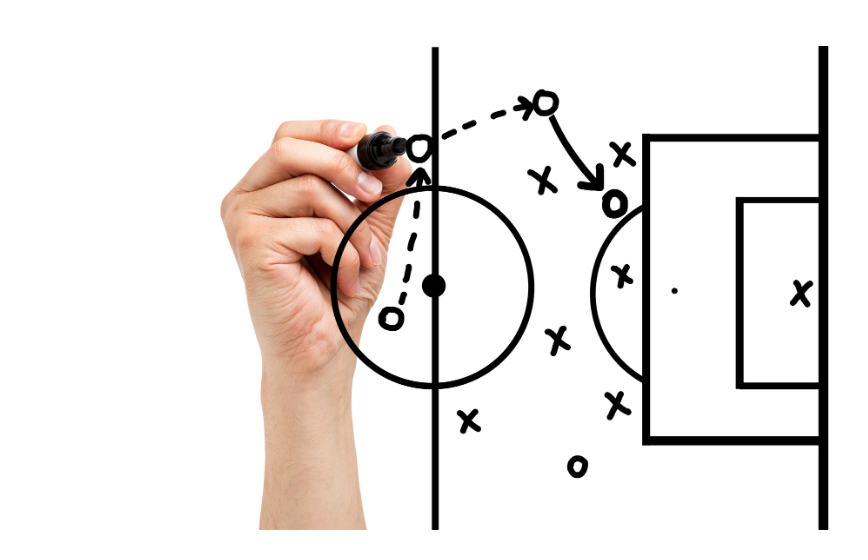
To begin, let’s start with the basics. These foundational soccer terms for parents make the rest of the game easier to follow.
A standard adult soccer match consists of two 45-minute halves, with a halftime break of up to 15 minutes. Youth games are generally shorter, depending on the age group and competition.
Time, Halftime and Extra Time
At the end of each half, the referee can add stoppage time, also called added time or injury time. This accounts for time lost through substitutions, injuries, disciplinary action and other delays. You’ll usually see the fourth official hold up a board showing the minimum additional time. The referee can add more if necessary. If a knockout match is tied after regulation time, the competition may use extra time. This typically consists of two 15-minute periods. If the score remains tied, the game can go to a penalty shootout. Teams initially take five kicks each, followed by sudden death if the score is still level. Competition rules determine whether extra time is used.
Goals and Scoring Terms
Scoring has its own vocabulary too:
- Goal: A score. The entire ball must cross the entire goal line, between the posts and underneath the crossbar.
- Assist: The pass or contribution that directly sets up a goal, as recognized by the competition’s statistics rules.
- Own goal: When a player puts the ball into their own team’s net.
- Brace: Two goals scored by one player in a match.
- Hat trick: Three goals scored by one player in a match.
- Clean sheet: When a team finishes a match without conceding a goal.
- Kickoff: The restart that begins each half and follows a goal.
Coach P’s Tip: When you’re watching your child’s game, don’t get too caught up in the score. Pay attention to the little things: good movement, communication, decision-making and how players respond after making a mistake. Those moments tell you a lot more about development than the scoreboard.
What the Lines, Boxes and Gear Are Called
Ever wonder why everyone keeps talking about “the box”?
Let’s break down the field. Knowing these soccer terms for parents helps you understand where play is happening and why.
Soccer field terminology
- Pitch: The British word for soccer field.
- Touchline: The long boundary lines running down each side of the field. Americans usually call these sidelines.
- Goal line: The boundary line at each end of the field.
- Halfway line: The line dividing the field into two halves.
- Center circle: The circle around the center mark. It has a radius of 10 yards. Opponents must stay outside it until the kickoff is taken.
- Penalty area: Also called the box or 18-yard box. On a standard full-size field, it extends 18 yards into the field and is 44 yards wide.
- Goal area: The smaller six-yard box inside the penalty area. Goal kicks are taken from within this area.
- Penalty spot: The spot 12 yards from the goal line where penalty kicks are taken.
- Penalty arc: The curved line outside the penalty area, sometimes called the D. It helps keep other players 10 yards from the penalty spot during a penalty kick.
- Corner arc: The small quarter-circle in each corner where corner kicks are taken.
- Technical area: The marked area around the team benches where coaches and authorized team officials are permitted to stand.
A standard adult soccer goal measures 8 feet high and 24 feet wide. Youth goals are smaller and vary depending on the age group and playing format.
Soccer equipment terminology
- Cleats / Boots: The shoes players wear. Americans generally say cleats, while much of the world says boots.
- Shin guards: Protective equipment worn underneath the socks. They are required under the Laws of the Game.
- Kit: The British word for a team’s uniform.
- Pinnies / Bibs: Lightweight mesh vests coaches use to divide players into teams during practice.
- Jersey: The shirt worn by a player.
- Socks: Long soccer socks that cover the shin guards.
Why Did the Referee Just Blow the Whistle?
This is where a lot of sideline confusion starts.
Soccer doesn’t technically call its rules “rules.” They’re known as the Laws of the Game. There are 17 laws, maintained by the International Football Association Board (IFAB).
Let’s look at the ones parents hear about most often. These are essential soccer terms for parents because they explain many of the referee decisions you’ll see.
Fouls and handballs
A foul is an unfair action against an opponent, such as kicking, tripping, pushing, holding or charging improperly. Some forms of careless or reckless physical contact are penalized with a free kick.
A handball occurs when a player deliberately handles the ball or when their arm position makes their body unnaturally bigger in a way that meets the requirements of the law.
Not every accidental touch of the hand or arm is automatically a handball. The referee considers the circumstances and the applicable law.
Goalkeepers are allowed to handle the ball inside their own penalty area, but there are restrictions.
For example, a goalkeeper generally cannot pick up the ball when a teammate deliberately kicks it to them with their foot. This is known as the back-pass rule. There are also restrictions on handling the ball directly from certain teammate restarts.
That’s one reason you’ll see modern goalkeepers playing with their feet almost like another defender.
Advantage
However, a referee doesn’t always stop play immediately after a foul. If the team that was fouled still has a good attacking opportunity, the referee can play advantage. You’ll often see the referee extend both arms forward or hear them shout “Play on!”
If the expected advantage doesn’t develop within a short period, the referee can return to the original foul and award the appropriate restart.
Yellow cards and red cards
- Yellow card: A caution. It goes on the player’s disciplinary record.
- Red card: A sending-off. The player must leave the field, and their team normally plays with one fewer player for the remainder of the match.
- Second yellow: Two cautions in the same match result in a red card.
- Dissent: Arguing with or showing disagreement toward the referee in a way that warrants a caution.
- Simulation: Deliberately trying to deceive the referee, often by pretending to have been fouled. You’ll also hear the word dive.
- Professional foul: A deliberate foul intended to stop an opponent’s attack. Depending on the circumstances, it can result in a yellow or red card.
- DOGSO: Short for Denying an Obvious Goal-Scoring Opportunity. Depending on the circumstances, it can result in a red card.
Free kicks and penalties
- Direct free kick: A restart from which a goal can be scored directly against the opposing team.
- Indirect free kick: A restart where another player must touch the ball before a goal can count. The referee raises one arm to signal it.
- Defensive wall: A group of defenders standing together to block a free kick. In most cases, opponents must remain at least 10 yards away, subject to specific exceptions in the Laws of the Game.
- Penalty kick: A direct shot taken from the penalty spot, 12 yards from goal, following certain direct-free-kick offences inside the defending team’s penalty area.
During a penalty kick, the goalkeeper must remain on the goal line, between the posts, with at least part of one foot touching, in line with or behind the goal line when the ball is kicked. The goalkeeper may move along the line.
The Offside Rule, Explained
Let’s be honest. Offside is probably the most argued-about rule in soccer.
It’s also one of the most misunderstood.
First, here’s the simple version. This is one of the soccer terms for parents that is worth understanding before the next game.
A player is in an offside position when any playable part of their head, body or feet is:
- In the opponent’s half of the field.
- Closer to the opponent’s goal line than the ball.
- Closer to the opponent’s goal line than the second-last opponent.
The goalkeeper usually counts as one of those opponents, but not necessarily.
Arms and hands don’t count when determining offside position.
Here’s the part people often miss: Being in an offside position isn’t automatically an offence.
A player is only penalized when they become involved in active play, such as playing the ball, interfering with an opponent or gaining an advantage from a rebound or deflection in the circumstances covered by the law.
There are also three important exceptions.
A player cannot be penalized for being offside directly from:
- A goal kick.
- A throw-in.
- A corner kick.
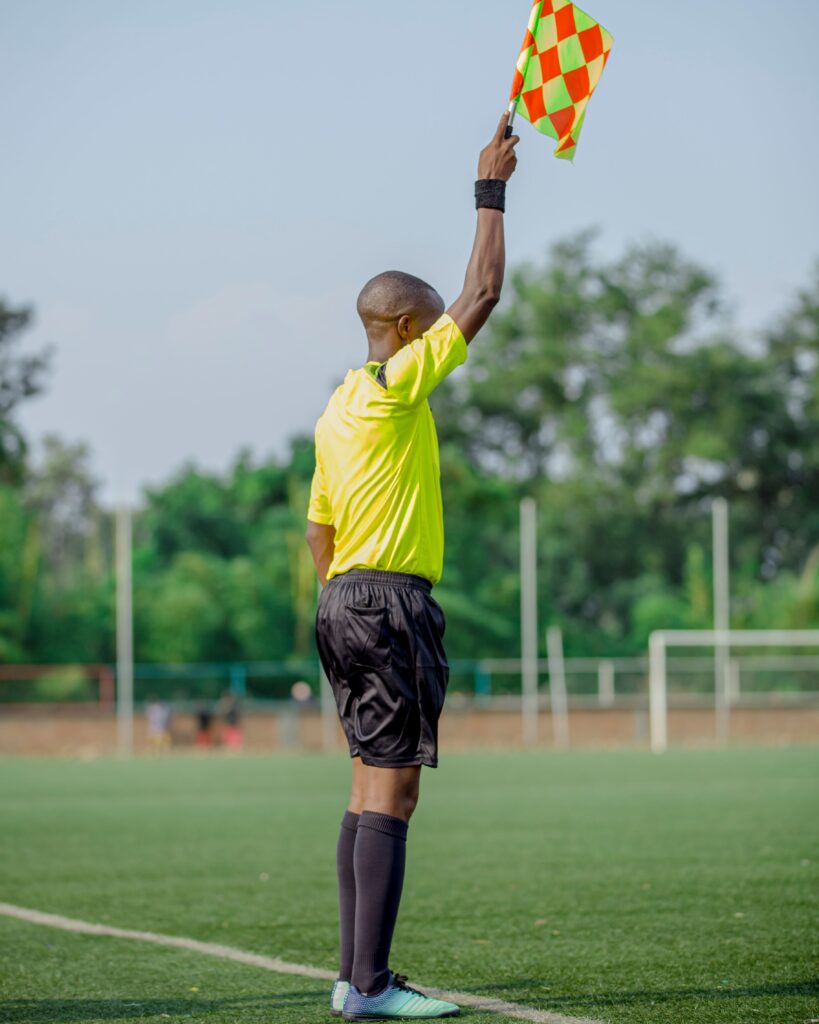
Assistant referees run along the touchlines and help identify offside offences. You’ll sometimes hear people refer to them by the older term “linesmen.”
At professional levels, you may also hear about VAR, which stands for Video Assistant Referee. VAR can review certain match-changing decisions, including goals, penalty decisions, direct red cards and mistaken identity.
You probably won’t see VAR at your child’s Saturday morning game.
Coach P’s Tip: Don’t expect young players to understand offside perfectly right away. It’s a rule that becomes easier to understand through playing, watching and experiencing different game situations. Let them learn the game instead of turning every offside call into a sideline debate.
Throw-Ins, Goal Kicks and Corners: Who Gets the Ball?
When the ball leaves the field, the referee awards a restart. As a result, understanding these restarts helps you follow the game.
Here’s how to understand the most common ones. These restart terms are useful soccer terms for parents to recognize from the sideline.
Throw-in
A throw-in is awarded to the team that didn’t touch the ball last when it completely crosses the touchline.
To take a legal throw-in, a player must:
- Face the field of play.
- Use both hands.
- Deliver the ball from behind and over the head.
- Have part of each foot on the touchline or on the ground outside it when releasing the ball.
You cannot score directly from a throw-in.
Goal kick
A goal kick is awarded to the defending team if the attacking team touches the ball last before the ball crosses the goal line without resulting in a goal. In other words, the defending team gets possession to restart play. The ball is placed within the goal area and is in play once it is kicked and clearly moves.
Corner kick
A corner kick is awarded to the attacking team when the defending team touches the ball last and it crosses their own goal line without a goal being scored.
The attacking team takes the kick from the corner arc.
Yes, you can score directly from a corner kick. That’s known as an Olympico goal.
Dropped ball
A dropped ball is used when the referee stops play for a reason that doesn’t require another type of restart.
The referee generally drops the ball for one player from the team that had or would have gained possession, when that can be determined. If play is stopped inside the penalty area, the ball is dropped for the defending goalkeeper.
New for the 2026–27 season: Five-second countdown
There are some important time-management changes in the 2026–27 Laws of the Game.
Under the new protocol, referees can use a visible five-second countdown when a team deliberately delays taking a throw-in or goal kick.
If the team doesn’t take the restart before the countdown expires:
- A delayed throw-in is awarded to the opposing team.
- A delayed goal kick results in a corner for the opposing team.
Goalkeepers also face an eight-second limit when controlling the ball with their hands or arms inside their penalty area.
The referee visually counts down the final five seconds. If the goalkeeper holds the ball longer than eight seconds, the opposing team receives a corner kick from the side closest to the goalkeeper’s position.
These measures are designed to reduce time-wasting and keep the game moving.
You can read the details in the official IFAB 2026/27 Law Changes.
Substitutions
Substitution rules depend on the competition.
Professional competitions generally have limits on the number of substitutions and when they can be made. High school and youth competitions have their own regulations.
Many recreational youth leagues allow rolling substitutions, meaning players can enter and leave the game multiple times according to league procedures.
Always check your competition’s rules.
The Skills and Moves Your Kid Keeps Talking About
Next, let’s look at the fun stuff.
This is where you’ll hear players talking about what they’re learning at practice or trying to pull off during a game. These skill-related soccer terms for parents can also help you follow conversations after practice.
First touch and ball control
- First touch: The first contact a player makes when receiving a pass. A good first touch sets up the next action.
- Trap: Bringing an incoming ball under control, whether it’s on the ground or in the air.
- Dribbling: Moving with the ball using controlled touches.
- Close control: Keeping the ball close while dribbling, especially when under pressure.
- Ball mastery: Developing comfort and control using both feet and different parts of the foot.
- Juggling: Keeping the ball in the air using the feet, thighs, chest or head where permitted. In Britain, it’s often called keepy-uppy.
- Weak foot: The player’s non-dominant foot.
- Surfaces: The different parts of the foot used to control and strike the ball, including the inside, outside, sole, laces and toe.
Want to help your child improve their first touch outside practice? Check out our guide to 7 soccer drills kids can do in the backyard.
Passing and receiving
- Short pass: A controlled pass over a short distance, often using the inside of the foot.
- Driven pass: A firm, powerful pass, usually played low.
- Lofted pass: A pass played through the air over an opponent or into space.
- Through ball: A pass played into space behind the defense for a teammate to run onto.
- One-two: Also called a give-and-go or wall pass. One player passes to a teammate, moves into space and receives the ball back.
- Cross: A pass played from a wide area into the penalty area.
- Cutback: A pass played backward from near the goal line toward a teammate arriving in a better shooting position.
- Switch of play: Moving the ball from one side of the field to the other to find space.
Shooting and finishing
- Volley: Striking the ball before it touches the ground.
- Half-volley: Striking the ball immediately after it bounces.
- Finesse shot: A placed shot that prioritizes accuracy and often uses the inside of the foot.
- Chip: A lifted shot intended to send the ball over the goalkeeper.
- Lob: A shot or pass lifted over an opponent, often the goalkeeper.
- Header: Playing the ball with the head. U.S. Soccer’s youth guidance prohibits heading in U11 practice and games and limits heading practice for U12 players. Check your league’s implementation.
- Finish: The final action used to score a goal.
For the age-specific guidance, see U.S. Soccer’s U11–U12 coaching guide.
Defending
- Tackle: An attempt to win the ball from an opponent.
- Block tackle: A standing challenge where a defender uses the foot to challenge for possession.
- Slide tackle: A tackle made while sliding along the ground. It requires good timing and control.
- Jockeying: Staying balanced and slowing down an attacker without diving into a challenge.
- Shielding: Using the body to protect the ball from an opponent.
- Interception: Reading and cutting out an opponent’s pass.
- Clearance: Moving the ball away from a dangerous area.
- Marking: Staying close to an opponent to limit their options.
- Recovery run: Sprinting back into a defensive position after losing possession.
Soccer moves
And then there are the moves everyone wants to try.
- Nutmeg: Playing the ball through an opponent’s legs and collecting it on the other side.
- Step-over: Moving a foot around or over the ball to trick a defender into thinking you’re going in another direction.
- Cruyff turn: Faking a pass or shot before pulling the ball behind the standing leg and turning away.
- Rabona: Kicking the ball with one leg wrapped behind the standing leg.
- Elastico: A quick movement that takes the ball in one direction before flicking it back the other way using the same foot.
- Body feint: Using the shoulders and body to convince a defender you’re moving one way before going the other.
Looks impressive when done well. Just remember that the best move is the one that helps you keep possession or create an opportunity.
Coach P’s Tip: Don’t confuse learning tricks with developing a player. A player who can consistently control the ball, recognize space, make good decisions and use both feet has a much stronger foundation than someone who can perform ten fancy moves but doesn’t know when to use them.
What the Coach Is Yelling From the Sideline
This might be the most useful section for parents. If you learn only a handful of soccer terms for parents, start with the calls in this section.
Coaches use short phrases because players don’t have time to listen to a long explanation in the middle of a game.
Here’s what those calls mean.
Attacking instructions
- Man on! An opponent is closing in on you. Be ready to protect the ball or play quickly.
- Time! You have space and time to look up and make a decision.
- Turn! You have room to turn and face the opponent’s goal.
- Back! Play the ball to a teammate behind you.
- Drop! Move the ball backward or move into a deeper supporting position, depending on the situation.
- Square! Look for a sideways pass to a teammate.
- Switch! Move the ball to the opposite side of the field.
- Support! Move closer to provide a passing option.
- Check! Move toward the ball to receive a pass, often before changing direction again.
- Hold! Keep possession or protect the ball rather than forcing a pass.
- Shoot! Take the opportunity to attempt a shot.
Defensive instructions
- Step! Move the defensive line forward together to reduce space.
- Drop! Move the defensive line backward to protect space behind.
- Press! Close down the player with the ball and apply pressure.
- Shift! Move across the field together toward the side where the ball is.
- Hold! Maintain your defensive position rather than chasing the ball.
- Away! Clear the ball out of a dangerous area.
- Track! Follow an opponent’s movement, especially when they’re making a run.
- Cover! Position yourself to help a teammate who is defending the ball.
- Mark up! Find and stay responsible for an opponent.
Goalkeeper calls
- Keeper! The goalkeeper is coming to collect the ball. Other players should leave it alone.
- Mine! A player is claiming the ball and communicating that they will play it.
- Leave it! Don’t touch the ball; let a teammate collect or play it.
Not every coach uses exactly the same terminology. Some phrases also mean slightly different things depending on the team’s system.
Coach P’s Tip: Parents, here’s something worth remembering: your child already has a coach giving instructions during the game. Try not to become a second coach from the sideline. Encourage them, enjoy the game and let them learn to recognize situations themselves.
If you want a little more guidance on what to say and what to avoid during games, read our soccer sideline etiquette guide for parents.
What the Announcer Is Talking About
Meanwhile, professional soccer broadcasts add another layer of vocabulary. These soccer terms for parents can make watching professional matches easier to understand, too.
Some of these phrases are fun, some are British slang, and others are used by commentators around the world.
- Worldie: An outstanding goal or piece of skill.
- Screamer: A spectacular goal, usually from distance.
- Top bins: The upper corner of the goal.
- Upper 90: The upper corner area of the net, referring to the clock-face position.
- Tap-in: An easy finish from close range.
- Sitter: A very easy scoring opportunity that a player misses.
- Woodwork: The goalposts and crossbar.
- Clinical: A player who finishes scoring opportunities efficiently.
- Dummy: Letting the ball run past or through your legs to deceive a defender and allow a teammate to collect it.
- In the mixer: The crowded area inside the penalty box where crosses and set pieces create chaos.
- Dead-ball specialist: A player particularly good at free kicks, corners or penalties.
- Six-pointer: A match between two teams competing for similar league positions, where the result can significantly affect both teams.
- Derby: A match between local or traditional rivals.
- Gaffer: British slang for a manager or head coach.
- Back of the net: A phrase used to celebrate a goal.
- The beautiful game: One of soccer’s most famous nicknames.
League and Tournament Words
Once you start following leagues and tournaments, you’ll hear a whole new set of terms. This group of soccer terms for parents will help make standings and tournament formats less confusing.
- League table: The standings showing how teams rank based on their results.
- Three points for a win: The standard league scoring system in many competitions. A draw earns one point and a loss earns none.
- Goal difference: Goals scored minus goals conceded. Often used as a tiebreaker.
- Draw: A match that finishes level. Americans often say tie.
- Fixture: A scheduled match.
- Friendly: An exhibition match that isn’t part of a competitive league or tournament.
- Group stage: A tournament stage where teams compete in groups before progressing to the next round.
- Knockout round: A stage where losing usually means elimination.
- Aggregate: The combined score across two matches in a two-legged competition.
- Promotion: Moving up to a higher division after a successful season.
- Relegation: Moving down to a lower division after finishing near the bottom of a league.
- Transfer window: A period when professional clubs can register player transfers.
- Loan: When a player temporarily joins another club while remaining under contract with their original club.
- Golden Boot: An award given to the leading goal scorer in a competition.
Promotion and relegation are common in many soccer leagues around the world, but the major U.S. professional leagues generally use a franchise-based system instead.
Youth Soccer Terms FOR Parent YOU Should Know
Now we’re getting to the terminology that can make navigating youth soccer confusing. These youth soccer terms for parents are especially helpful when comparing programs and understanding team placement.
If you’re a parent entering the sport for the first time, you’ll quickly discover that recreational soccer, club soccer and elite competition are very different environments.
Here’s what the terminology actually means.

Recreational and competitive soccer
- Recreational soccer (Rec): Community-based soccer focused on participation, enjoyment and learning the game. Registration is generally open, and teams usually don’t require competitive tryouts.
- Club soccer: Organized competitive soccer outside the recreational structure. Teams generally hold tryouts, train more frequently and travel for games and tournaments.
- Travel soccer: A term commonly used for competitive teams that travel to play other clubs. The exact meaning varies by region and organization.
- Select soccer: A team or program that selects players through an evaluation or tryout process.
- Academy: A development-focused program within a club. The level and quality of academy programs vary considerably.
- Elite soccer: A broad term describing higher levels of competition. It doesn’t automatically mean every player receives better coaching or individual development.
If your family is considering moving from recreational to competitive soccer, our complete guide to making the jump from rec to competitive soccer explains what to expect, what to ask and how to prepare.
Youth soccer organizations and leagues
- ODP: Olympic Development Program. A player identification and development program operated through state associations affiliated with US Youth Soccer.
- ECNL: Elite Clubs National League. A competitive youth soccer league with a strong focus on player development and college exposure.
- MLS NEXT: A national youth soccer platform connected to Major League Soccer’s development pathway.
- USYS: United States Youth Soccer, one of the major youth soccer organizations in the country.
- US Club Soccer: A national organization that supports competitive youth soccer clubs and leagues.
- AYSO: American Youth Soccer Organization, known for its community-based programs and participation-focused philosophy.
These organizations and leagues have different structures, eligibility requirements and levels of competition.
Some more useful soccer terms for parents
Age groups and team placement
Importantly, age groups have changed in the United States, making this especially important for parents to understand.
For the 2025–26 season, the January 1–December 31 birth-year system remained in place for US Youth Soccer, US Club Soccer and AYSO.
Beginning with the 2026–27 season, those three organizations are moving to an August 1–July 31 age-group formation cycle.
For example, under this system, the U10 age group for 2026–27 generally includes players born between August 1, 2016 and July 31, 2017.
This means the age-group label doesn’t necessarily mean every player is currently younger than 10 throughout the season.
Important: U.S. Soccer allows member organizations to determine age-group policies for the leagues and competitions they operate or sanction. Not every organization necessarily follows the same system. Always confirm the cutoff dates with your child’s club or league rather than assuming every organization uses the same birthdate range.
You can check the official information here:
- U.S. Soccer: Player Registration and Age Group Formation
- US Youth Soccer: Age Group Formation Update
- US Club Soccer: Official Age Group Chart
Playing Up, Tryouts and Team Placement
Other age-group and team-placement terms include:
- Playing up: Competing in an older age group than your assigned age group, where permitted.
- Playing down: Competing in a younger age group, where competition rules allow it.
- Tryout: An evaluation period where coaches assess players before selecting a team.
- Roster: The official list of players registered to a team.
- Roster freeze: A deadline after which roster changes are restricted or prohibited.
- Player card / pass: A document or digital record used to verify a player’s identity and eligibility.
- Guest player: A player temporarily participating with another team, subject to competition rules.
- Pool training: Training sessions where a larger group of players trains together before final team placement.
- Team placement: The process of assigning players to teams based on age, ability, availability or other club criteria.
- Development pathway: The progression of opportunities available to players as they improve and move through different levels of the game.
Training and development terminology
These are terms parents should understand because they tell you a lot about what your child is working on. They are practical soccer terms for parents to know when talking with coaches.
- Small-sided games: Games played with fewer players on smaller fields. They create more opportunities for players to touch the ball, make decisions and participate.
- Build-out line: A marked line used in certain younger age-group formats to help teams build out from the back during goal kicks and goalkeeper possession.
- Ball mastery: Developing control and confidence with the ball using both feet and different surfaces.
- Technical development: Improving individual soccer skills such as passing, receiving, dribbling and shooting.
- Tactical awareness: Understanding positioning, movement, space and decisions during a game.
- Game intelligence: Recognizing situations and making effective decisions.
- Transition: The moment a team changes from attacking to defending or defending to attacking.
- Pressing: Applying pressure to the opponent to win the ball back.
- High press: Pressing opponents high up the field, often near their own goal.
- Build-up play: Moving the ball from the back through the field to create attacking opportunities.
- Overlapping run: When a player runs past a teammate who has the ball to create an additional attacking option.
- Underlapping run: When a player makes a supporting run inside a teammate rather than around the outside.
- Recovery run: Returning quickly to a defensive position after losing possession.
Want to understand how these skills translate into better decisions on the field? Check out our guide to what soccer IQ means for youth players.
College soccer and player exposure
For older players and families thinking about college soccer, these terms become important. They are also useful soccer terms for parents navigating the next stage of the game.
- Showcase: A tournament or event designed to give players opportunities to be evaluated by college coaches.
- ID camp: A college or club identification camp where coaches evaluate players who may be potential recruits.
- Recruiting: The process of identifying, communicating with and evaluating players for potential college opportunities.
- College commitment: When a player announces their intention to attend a college and participate in its soccer program, subject to the applicable admissions and athletic requirements.
The business side of youth soccer
Finally, there’s another set of terms parents should understand before committing to a competitive program. These soccer terms for parents can help families ask better questions about costs and expectations.
- Pay to play: The model where families pay club fees and other expenses to participate in competitive soccer.
- Club fees: The money charged by a club for registration, coaching, facilities and other services.
- Tournament fees: Additional costs associated with participating in tournaments.
- Player development: The process of improving a player’s technical, tactical, physical and mental abilities over time.
Club soccer can cost families thousands of dollars annually when registration, travel, equipment and tournament expenses are included.
But here’s something I always want parents to remember:
The most expensive club isn’t automatically the best club for your child. And the highest-level team doesn’t automatically guarantee the best individual development.
Look at the coaching, environment, opportunities, playing time, communication and overall experience.
Your child’s development should always be part of the conversation.
If your child isn’t getting the playing time you expected, don’t miss our article on what to do when your child isn’t getting playing time in youth soccer.
FAQ
It means an opponent is approaching the player with the ball. It’s a warning to make a quick decision, protect possession or pass before being challenged.
What does “Time!” mean in soccer?
It means the player on the ball has space and isn’t under immediate pressure. They can take a moment to look up, control the ball and decide what to do next
A nutmeg is when a player passes or dribbles the ball through an opponent’s legs and collects it on the other side.
U10 is a youth soccer age division. Under the 2026–27 August 1–July 31 age-group system used by US Youth Soccer, US Club Soccer and AYSO, U10 generally includes players born between August 1, 2016 and July 31, 2017
Always check the age-group rules of your particular league.
Playing up means a player competes in an older age group than their assigned age group. This can happen for different reasons, including development opportunities, team placement or roster needs, where league rules permit it.
Pay to play describes a system where families pay fees to participate in competitive soccer programs. Costs can include registration, coaching, uniforms, tournaments and travel.
One Last Thing: You Don’t Have to Know Every Soccer Term
If you’re a parent new to soccer, don’t feel like you need to memorize this entire glossary before the next game. Soccer terms for parents become familiar naturally as you watch and learn.
Learn a few terms at a time. Pay attention to what coaches are teaching. Keep this guide to soccer terms for parents handy and come back to it whenever a new phrase comes up. Ask questions when you don’t understand something. And most importantly, let your child enjoy learning the game. Soccer is about much more than formations, tactics, terminology and results. It’s about developing confidence, learning to make decisions, building friendships and enjoying the experience.
At Soccer Compass, that’s something we believe should never get lost in the competition. If you’re a parent looking to become more comfortable around the game, start with our guide to soccer positions explained for parents. Want to learn how to support your child’s development outside practice? Explore our guide to soccer practice at home. And if you hear a soccer term at your next game that isn’t on this list, I’ll add it!